
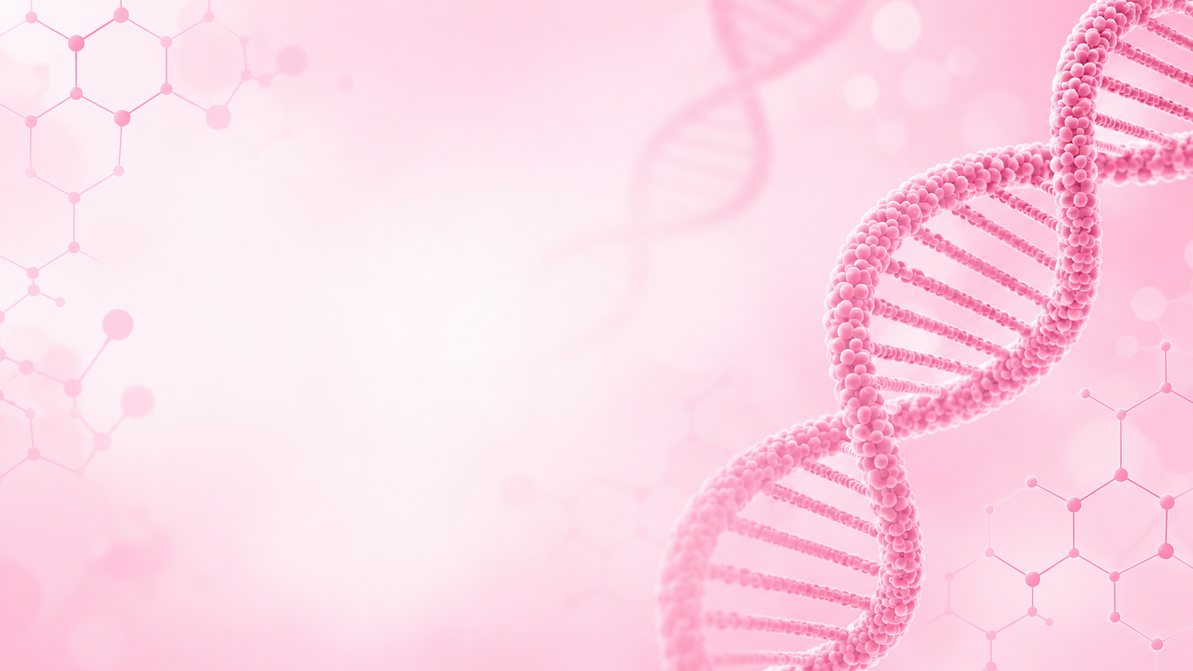
DNA Sequencing for Beginners
MOLECULAR BIOLOGY • GENOMICS
DNA Sequencing for Beginners
Principles, Methods, Laboratory Workflow and Applications
DNA sequencing is a fundamental molecular biology technique used to determine the precise order of nucleotides in a DNA molecule. These nucleotides are adenine (A), thymine (T), cytosine (C) and guanine (G).
By reading the genetic code, scientists can study genes, identify genetic variations, investigate microorganisms and understand biological processes.
DNA sequencing identifies the exact order of DNA bases, allowing researchers to access the genetic information stored in a DNA molecule.
1. Understanding DNA Structure
DNA is a double-stranded molecule organized into a double helix. Each strand contains four nitrogenous bases.
| DNA Base | Complementary Base |
|---|---|
| Adenine (A) | Thymine (T) |
| Thymine (T) | Adenine (A) |
| Cytosine (C) | Guanine (G) |
| Guanine (G) | Cytosine (C) |
For example, a DNA sequence can be represented as:
The complementary strand is:
2. Principle of DNA Sequencing
The principle of DNA sequencing is to identify the nucleotide present at each position of a DNA fragment.
Depending on the technology, nucleotide identification can involve fluorescent signals, DNA synthesis reactions or changes in electrical current.
The basic sequencing process
01. DNA Extraction
Isolation of DNA from biological samples.
02. Library Preparation
Preparation of DNA fragments for sequencing.
03. Sequencing
Detection of nucleotide-specific signals.
04. Data Analysis
Processing and interpretation of sequencing results.
3. Main DNA Sequencing Methods
Sanger Sequencing
Sanger sequencing is a first-generation DNA sequencing technique developed by Frederick Sanger and colleagues in 1977.
It is based on the incorporation of dideoxynucleotides (ddNTPs), which terminate DNA strand elongation because they lack the 3′ hydroxyl group needed to form the next phosphodiester bond.
The resulting DNA fragments are separated according to their length and analyzed to determine the nucleotide sequence.
Applications: Sequencing individual genes, confirming mutations and validating genetic variants.
Next-Generation Sequencing (NGS)
Next-generation sequencing enables millions of DNA fragments to be analyzed simultaneously through massively parallel sequencing.
NGS is widely used in:
- Whole-genome sequencing.
- Whole-exome sequencing.
- Targeted gene sequencing.
- Microbial genome analysis.
- Genetic variation studies.
Long-Read Sequencing
Long-read sequencing technologies analyze individual DNA molecules and can generate much longer reads than conventional short-read methods.
They are particularly useful for studying repetitive regions, structural variations and complex genome assemblies.
4. Comparison of Sequencing Methods
| Feature | Sanger | NGS |
|---|---|---|
| Throughput | Low | High |
| Approach | Chain termination | Parallel sequencing |
| Applications | Individual genes | Large genomic studies |
| Data analysis | Relatively simple | Computationally intensive |
5. DNA Sequencing Workflow
A typical DNA sequencing experiment includes the following laboratory stages:
Step 1 – Sample Collection: Biological material such as blood, tissue, cultured cells or microorganisms is collected.
Step 2 – DNA Extraction: DNA is isolated and purified from the biological sample.
Step 3 – Quality Control: DNA concentration, purity and integrity are evaluated.
Step 4 – Library Preparation: DNA fragments are prepared and sequencing adapters are added when required.
Step 5 – Sequencing: The sequencing instrument generates nucleotide sequence information.
Step 6 – Bioinformatics: Sequence reads are processed, quality checked and analyzed.
Step 7 – Interpretation: Researchers investigate genetic variations and biological findings.
6. Understanding Sequencing Data
Sequencing instruments generate digital files that contain nucleotide information.
FASTQ Format
FASTQ files contain nucleotide sequences and associated quality scores for each base.
FASTA Format
FASTA files store nucleotide or amino acid sequences and are commonly used for reference sequences and genome analysis.
Phred Quality Score
Phred scores estimate the probability of an incorrect base call.
- Q20: 1% estimated error probability.
- Q30: 0.1% estimated error probability.
- Q40: 0.01% estimated error probability.
7. Applications of DNA Sequencing
- Genomics: Investigation of genome structure and genetic diversity.
- Medical research: Study of inherited genetic variations and disease-associated genes.
- Microbiology: Identification and characterization of microorganisms.
- Evolutionary biology: Analysis of genetic relationships between organisms.
- Agricultural research: Investigation of genetic traits in plants and crops.
- Environmental science: Analysis of environmental DNA and biodiversity.
8. Challenges and Limitations
Despite its many advantages, DNA sequencing has several limitations:
- Low-quality or contaminated DNA samples.
- Sequencing errors and inaccurate base calls.
- Difficulty analyzing repetitive genomic regions.
- High computational and data storage requirements.
- Complex interpretation of genetic variants.
9. Future Perspectives
Advances in sequencing technologies are improving read accuracy, throughput and the ability to analyze complex genomic regions.
Long-read sequencing, single-cell genomics and integrated bioinformatics approaches are opening new opportunities for investigating biological systems and genetic variation.
Conclusion
DNA sequencing is an essential technology in modern molecular biology. By determining the order of nucleotide bases, researchers can explore genetic information, understand biological diversity and investigate the molecular mechanisms of living organisms.
Understanding Sanger sequencing, next-generation sequencing and long-read technologies provides a strong foundation for anyone beginning to study genomics.
10. Scientific References
DNA sequencing with chain-terminating inhibitors. Proceedings of the National Academy of Sciences, 74(12), 5463–5467.
https://doi.org/10.1073/pnas.74.12.5463Sequencing technologies – the next generation. Nature Reviews Genetics, 11, 31–46.
https://doi.org/10.1038/nrg2626The sequence of sequencers: The history of sequencing DNA. Genomics, 107(1), 1–8.
https://doi.org/10.1016/j.ygeno.2015.11.003Coming of age: ten years of next-generation sequencing technologies. Nature Reviews Genetics, 17, 333–351.
https://doi.org/10.1038/nrg.2016.49DNA sequencing technologies: 2006–2016. Nature Protocols, 12, 213–218.
https://doi.org/10.1038/nprot.2016.182Scientific educational resource
Recent Posts
-

DNA Sequencing for Beginners
MOLECULAR BIOLOGY • GENOMICS DNA Sequencing for Beginners Principles, Methods, Laboratory Workflow …6th Nov 2026 -
Introduction to Polyacrylamide Gels
Introduction to Polyacrylamide Gels: Structure, Polymerization and Applications Understanding the …5th Nov 2026 -
Hydrophobic Interaction Chromatography
Hydrophobic Interaction Chromatography: Principles, Mechanism and Applications Understanding prote …5th Nov 2026